

A new report is calling on Australian organisations to move beyond one-size-fits-all gender equity efforts and confront the systemic barriers holding culturally and racially marginalised (CARM) women back from leadership positions.
The report captures early findings from the RISE Project (Realise. Inspire. Support. Energise.), a four-year initiative working with 25 organisations across Australia to break down systemic barriers and expand leadership pathways for CARM women. The project was led by Diversity Council Australia (DCA), Settlement Services International (SSI) and Chief Executive Women (CEW), with funding from the Australian government Office for Women.
The RISE Project: an Insights Report draws on organisational diagnostics, lived experience insights and emerging evidence from participating organisations to explore what drives sustainable and inclusive change.
Early findings from the report highlight that organisations made the strongest progress when they focused on building racial literacy, centring CARM women’s voices in organisational decision-making, improving access to sponsorship and influential networks, and strengthening the data and metrics needed to track equity outcomes.
Key highlights from the report:
• 360 CARM women took part in the RISE Project across 25 participating organisations
• 623 mentoring or coaching sessions were delivered with 157 participants
• 269 participants took at least one step towards their career goals
• 63 women participating in the project secured a new role.
The report provides an initial set of descriptive learnings from the project. While further analyses are still underway, the Insights Report focuses on how organisations engage with the process of eliminating gendered racism in practice, providing insights into the steps organisations can take to move from intent to implementation.
“In 2023, DCA’s landmark CARM Women in Leadership report identified the entrenched systemic barriers CARM women face in Australian workplaces. That same year, we launched RISE alongside our consortium partners SSI and CEW to address those barriers and help create more equitable pathways to leadership,” said Dr Virginia Mapedzahama, DCA’s Racial Equity and Intersectionality Director and Project Lead, RISE.
“As this project comes to an end, our hope is that these findings will inform and strengthen ongoing efforts to drive systemic change so that more CARM women can access the leadership opportunities they deserve.
“If organisations want different leadership outcomes, they need to ask different questions, listen more carefully to the women most affected, and be willing to change the systems that hold inequity in place.”
“In many organisations, the higher you move up the leadership pipeline, the less diverse it becomes. That pattern reflects the structural and attitudinal barriers that CARM women continue to face in Australian workplaces — barriers that cannot be addressed through one-size-fits-all approaches,” said SSI CEO Violet Roumeliotis.
“This report is essential reading for any organisation seeking to dismantle those barriers and build more fair and inclusive workplaces. The findings show the profound impact when employers take the time to listen and create environments where CARM women can thrive. When we invest in and support CARM women to succeed on their own terms, we create stronger, more inclusive organisations that are better equipped for the future.”
“Efforts to advance women that treat all women as one group will always overlook those who face the greatest obstacles. CARM women are capable, ambitious and ready to lead; what holds them back is a system built around a narrow idea of who a leader is, not any lack of talent,” said Lisa Annese, CEO of Chief Executive Women.
“This report gives organisations a practical place to begin, and Chief Executive Women urges them to take it. Real progress means redesigning the pathways into leadership, not asking women to fit a mould that was never made for them.”
Access the RISE Project: an Insights Report via DCA’s website.
List of RISE participating organisations
Accenture Australia Pty Ltd
ACON Health Limited
Anglicare Victoria
ANU College of Systems and Society
Arup
Aurecon
Australian Financial Complaints Authority (AFCA)
BHP
Crown Resorts
Deloitte
EnergyAustralia
Gilbert + Tobin
HCF – Hospital Contributions Fund of Australia
Jesuit Social Services
Navitas Pty Ltd
Royal Australian and New Zealand College of Obstetricians and Gynaecologists (RANZCOG)
Russell Kennedy
Spectrum Migrant Resource Centre
Telstra
The Star Entertainment Group
Uniting NSW.ACT
University of Sydney
University of Technology Sydney
Westpac Group
Woolworths Group
Though she never set out to build a career in music, Chilian-born singer and songwriter Magdalena Mira found herself drawn back to it time and again. Each step, shaped by chance and connection, brought her closer to where she is today.
Award inspiration
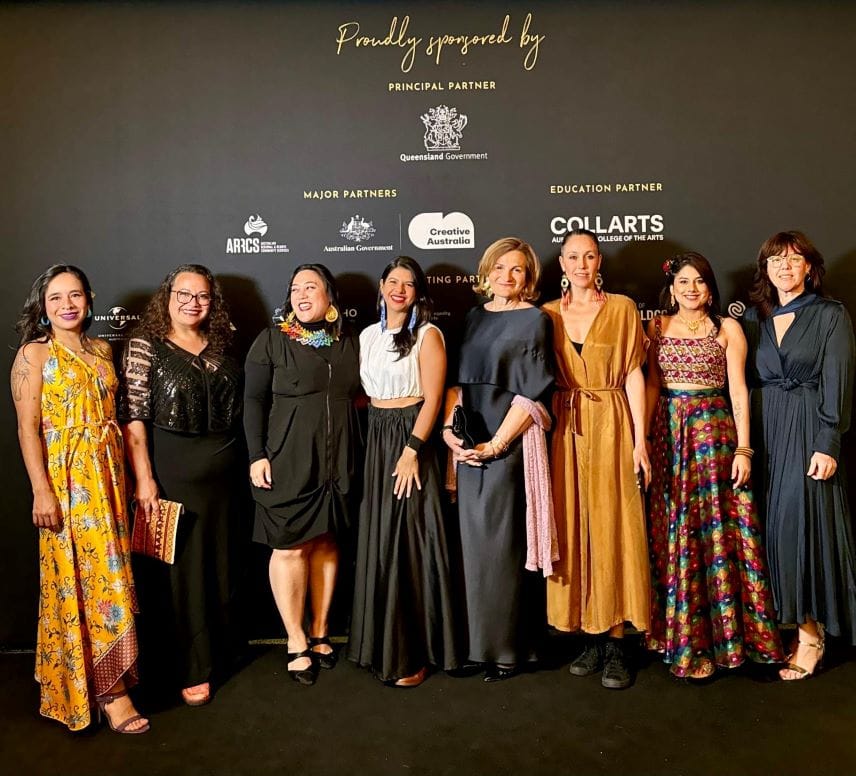
In 2024, that path led her to join SSI’s delegation to the Australian Women in Music Awards (AWMA). Each year SSI supports women from diverse backgrounds to take part in the conference and awards, offering opportunities to connect, learn, and be recognised. For Magdalena, the invitation came from a close friend and opened the door to an experience that was both empowering and transformative.
“Sandra convinced me to apply, and I thought, why not? When I was selected, it felt like such a gift,” Magdalena said.
Sandra Morales was a finalist in the SSI Diversity Award in 2024. Her encouragement gave Magdalena the confidence to apply for the delegation – something she admits she would never have done on her own.
Music and life intertwined
Magdalena’s path into music was not linear. She studied music at school, but it wasn’t until life experiences and relationships drew her back to performing that she found herself committed to it.
Raising children meant she stepped away for several years, but when she returned, she came back with more passion than ever before. She formed an Afro-Peruvian band, performed at venues across Sydney, and decided she wanted to pursue music full time.
“Music has always found me. Even when I took a break, it called me back. Now I just want to keep doing it,” she said.
Connection over competition
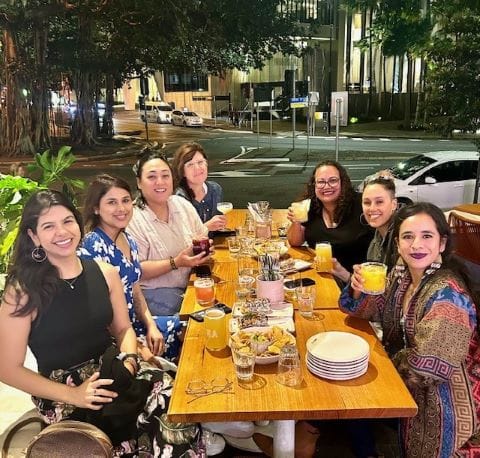
For Magdalena, the highlight of being part of the SSI delegation was the connection with other women. She speaks warmly of the friendships formed with fellow artists and the sense of belonging that grew from their shared experiences.
“The best part was our little crew. We supported each other, laughed, connected, and had the kind of conversations that stay with you. It was such a beautiful experience,” she said.
The delegation gave Magdalena access to industry leaders and valuable networking opportunities, but what stood out most for her was how genuine the connections felt. The professional insights were powerful, and the support of the group made the experience even more meaningful.
“I learned to stay authentic. Watching other women give their all to their music reminded me that being true to yourself is what matters most. That’s the only way to sustain a career and a life in music.”
The power of visibility
Magdalena believes events like AWMA play a vital role in giving visibility to women in music, especially those from diverse backgrounds. The conference offered her exposure to people she would never otherwise have met, and a chance to see how the industry works in Australia.
She also recognised the importance of collective strength.
“When women come together with authenticity, they create real strength. That’s why events like AWMA matter. With their influence, they hold a responsibility to lift up diverse women in music and ensure their stories are seen and heard.”
Carrying it forward
Since AWMA, Magdalena continues to perform and create music. The lessons from the delegation – about authenticity, resilience, and community remain part of her approach to her career.
She keeps in touch with some of the artists she met, follows their journeys and celebrates their achievements.
Reflecting on the experience, she hopes more women take the chance to be part of future delegations.
“If I could give advice, it would be to just be yourself. Don’t try to be someone else. Your voice and your story are enough.”
Migration is an incredibly complex and personal experience, often shaped by conflict, trauma, and loss.
For women like Ukrainian counsellor Olga, this journey also intersects with a range of unique challenges tied to personal challenges and specifics of her qualification and profession. That was a place where she transformed individual refugee experience into a powerful tool to help other newcomers.
 In 2022, after the war broke out, Olga fled her home with her family. Seeking safety for her children, she arrived in Australia and began rebuilding their lives in a new country.
Her journey was not easy, like that of many women refugees, but her new life required and highlighted the importance of an attentive and gentle approach in resettlement services.
Olga said she felt less alone after she began working with her case manager through SSI’s Humanitarian Settlement Program (HSP), which provides tailored services designed to meet the unique needs and strengths of individuals and families resettling in Australia as refugees.
“My case worker, Munira, gave me a lot of attention and time, offering everything I could possibly need. I felt supported in everything I did through the program,” she said.
Olga found that participating in the programs’ orientation sessions not only helped her learn about the new country her family now called home but also helped her to connect with other members of the Ukrainian community in Australia, fostering a better sense of belonging.
“These sessions were incredibly helpful; I still remember the knowledge I gained from them years ago. It was an amazing start for my professional growth in Australia,” she said.
As an experienced counsellor who was waiting for her qualification to be recognised, Olga was happy to facilitate and deliver groups about domestic, sexual, and family violence (DFSV) awareness for the Ukrainian community, where support for newly arrived women was a key focus. She was also grateful to have the opportunity to share her expertise and facilitation skills to support other refugees during the orientation sessions and groups for the families in cultural transition.
 “It’s essential for newly arrived refugees to have a platform where they can address issues and learn how to protect themselves and their families. Everyone deserves to be safe, especially at home, even if it’s very new,” Olga said.
She secured employment opportunities with the support of SSI’s Refugee Employment Support Program, along with her dedication and ability to navigate her networks and community.
Olga worked tirelessly to have her overseas qualification recognised and secure the right to work as a counsellor in Australia. All while studying and managing full responsibility for her family.
Later, she secured a role as an employment facilitator with RESP and found out that SSI’s gender-sensitive services also include wellbeing assessment tools designed to identify potential trauma experiences, such as DFSV, and assess the risks women may face during resettlement. It was important to have those tools in her work. “By identifying such risks early, our specialists can intervene and provide appropriate support and resources,” she said.
 Like many refugee women leading their households, Olga’s economic goal to gain employment was crucial to building her sense of independence. However, despite her extensive background in psychotherapy, she initially struggled to find employment due to her visa status.
With support from SSI’s Ignite Small Business Start-ups, Olga’s combined her skills and networks to establish her own business, OK Club, running mindfulness workshops for refugees online and in person, including a Women’s Circle retreat for Ukrainians.
“What I was trying to achieve was difficult, but with the support I had at the time, it was possible,” she said.
In 2024, Olga began working full-time with NSW Service for the Treatment and Rehabilitation of Torture and Trauma Survivors (STARTTS) as a therapeutic counsellor, offering therapeutic support to other people who have navigated forced displacement.
“Such a beautiful place we call our new home. I adore the equality of genders in Australia. It is amazing that as professionals we have programs like Gender Equity Strategy to support our clients. I take a gendered approach to migration and resettlement, ensuring everyone receives the support needed to thrive, rebuild their lives, and contribute meaningfully.” Learn more.
Business groups, unions, social services and community organisations have united to demand changes to federal workforce strategy that would address skills shortages crippling Australian communities, families and businesses.
(more…)Culturally and linguistically diverse (CALD) women and children impacted by family, domestic and sexual violence (FDSV) will have better support with a new transformative project, led by non-profit SSI, in partnership with Federation of Ethnic Communities’ Council of Australia (FECCA).
(more…)We are calling for urgent action to lift Australia’s humanitarian intake, as new research from the United Nations High Commissioner for Refugees (UNHCR) shows the number of people experiencing forced displacement increased at a record-breaking rate in 2023.
The UNHCR’s Global Trends: Forced Displacement in 2023 has found that more than 117 million people were forcibly displaced by violence, conflict, and persecution in 2023 – up by almost 9 million people from the prior year.
Forced displacement is estimated to have continued rising in the first four months of 2024, likely surpassing 120 million by the end of April.
For the past 12 years, the UNHCR has recorded annual increases in forced displacement, with each year setting a new record.
This record-breaking displacement highlights the need for the Australian government to increase the humanitarian intake to respond to pressing global needs.
We are calling on the Australian government to meet its commitment to increase the humanitarian intake from 20,000 places to 27,000 places per annum.
Despite the rapidly growing need for resettlement places, the size of Australia’s Humanitarian Program had remained relatively stagnant for decades.
Scaling up the program would help address the significant global shortfall in resettlement places, reunite refugees already in Australia with their families, and showcase Australia’s commitment to being a responsible global citizen.
There is also widespread recognition globally of the need for a range of permanent and secure pathways for the growing number of refugees around the world. This includes complementary pathways such as community sponsorship. It is an innovative solution that enables everyday community members to step up to protect people displaced by conflict and persecution.
Australia’s refugee resettlement sector has the skills and expertise to quickly scale up and support an increased refugee intake. We simply ask the government to open the door.
Read the UNHCR’s full report.
SSI welcomes the Federal Government’s announcement of a new study that will tackle antisemitism, Islamophobia, and the experience of First Nations people within the Australian university sector. The study aims to examine racism in universities and provide recommendations to ensure the safety of students and staff members.
Australia needs to create a safe environment for everyone, irrespective of their language, race or cultural background.
What is clear from the growing evidence base is that racism is prevalent in Australian communities. Racism poses a significant social and economic threat to our country.
Efforts to support social cohesion must go beyond the positive promotion of multiculturalism and actively denounce racism.
We view this study, which will be led by the Race Discrimination Commissioner, as an important step towards better understanding the prevalence and impact of racism and, importantly, practical actions to reduce it.
SSI continues to call for a coordinated, national response to eliminate racism and promote social inclusion, both on campuses and across our country. Australia will be stronger and safer for it.
SSI welcomes the vision set out in the Federal Government’s newly released Early Years Strategy as a step towards early childhood policies, programs and services that will support the best outcomes for all children, regardless of their backgrounds.
This Early Years Strategy is underpinned by the principles of equity and inclusion, including a commitment to provide foundational supports to children with potential developmental delays and to address these concerns early.
We also commend the focus on maintaining children’s identities and cultural connections. This sits alongside a commitment to empower parents, caregivers and families in ways that are culturally responsive and targeted – something we see the importance of throughout our work with culturally diverse families, including as part of the national Community Hubs program.
From our work delivering place-based initiatives such as our involvement in Logan Together, we recognise the importance of local solutions for local problems, reflected in the Strategy.
Importantly, this is Australia’s first Early Years Strategy to strengthen accountability, coordination and collaboration across all levels of government over the next 10 years, setting a clear roadmap for change with action plans and an outcomes framework to monitor and track progress. SSI looks forward to being part of these collaborative initiatives and translating them into tangible outcomes for all Australian children.

SSI welcomes the NSW Government’s funding package of $230 million over four years as an essential initial response and immediate action to support meaningful, real solutions that will keep women and children in the state safe.
SSI further welcomes the comprehensive nature of the package encompassing prevention, early intervention, crisis response, justice system improvements, and service sector support for enhanced capacity. It is particularly heartening to see funding targeted towards children who are often overlooked in the development of government policy, particularly those from multicultural backgrounds.
It is critical that our safety systems and services are responsive to communities in all their diversity. At present, the system is complex and difficult to navigate for multicultural communities, particularly those who are new to Australia.
Working with migrant, refugee and multicultural communities, we see firsthand the importance of integrated services and case management in support of women impacted by gender-based violence.
SSI provides culturally responsive safety services to migrant and refugee women and children, works with multicultural communities to design and implement awareness raising initiatives, and builds capacity of settlement services to support women, children and families.
We urge the NSW government to ensure that equitable access, experience and outcomes—including specifically for migrant and refugee women and children—are central to the implementation of the package and are embedded in the ongoing focus on addressing the crisis in the state of women’s and family safety.
SSI is committed to working with the NSW government and the specialist domestic, family and sexual violence sector to ensure meaningful collaboration in tackling the root causes of this crisis and to bring about a positive change for all women and children.
Seven multi-talented female music professionals representing seven cultural backgrounds recently came together as part of SSI’s delegation at Australian Women in Music Awards (AWMA) culminating in a glamorous ceremony at the heart of Meanjin/Brisbane.
(more…)